 Image 1 of 1
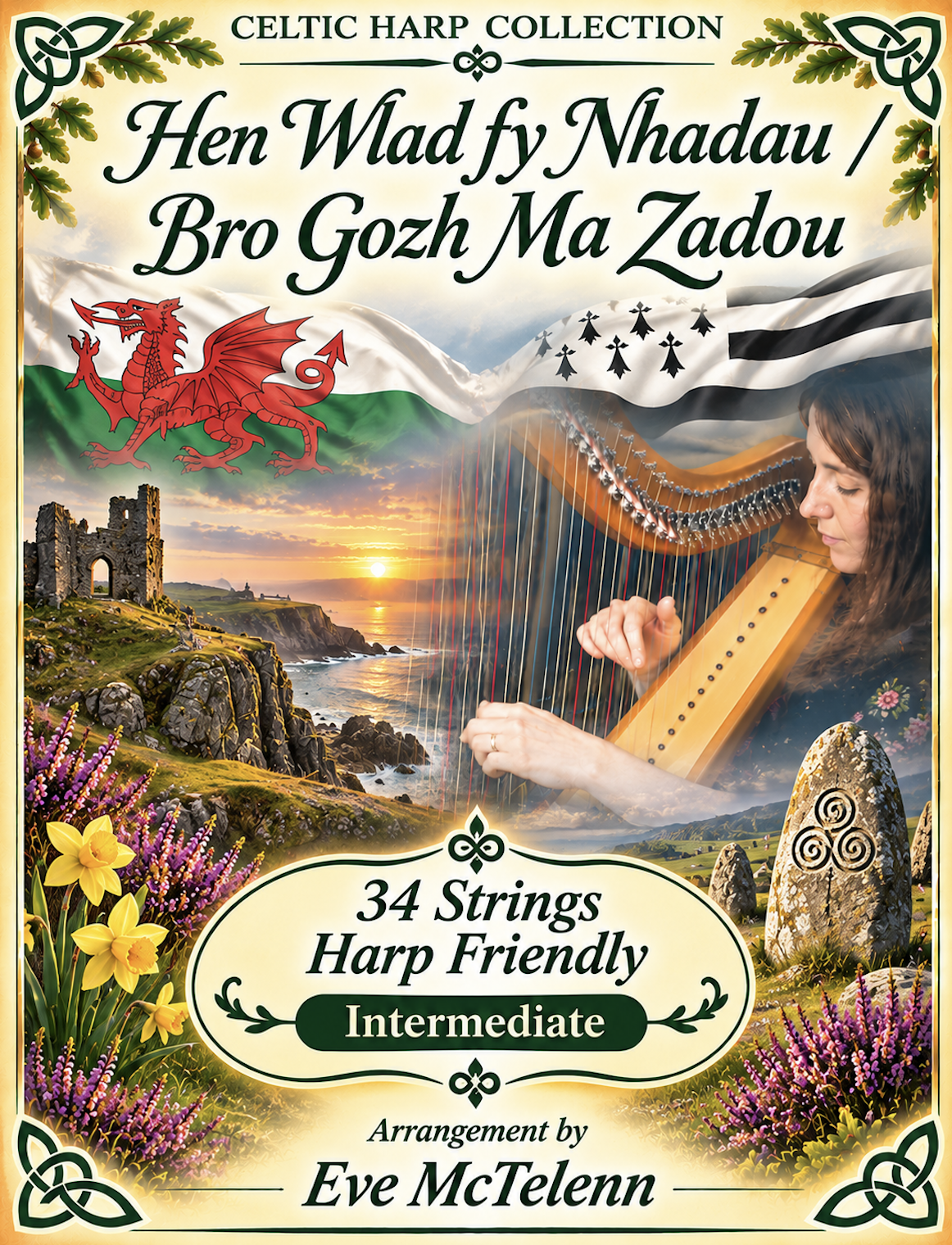
Hen Wlad fy Nhadau / Bro Gozh Ma Zadou
€5.90
Two anthems, one melody, a shared Celtic heritage.
The story begins in Wales, in January 1856. A father and son, Evan James, a poet, and James James, a musician and harpist, jointly created a song originally entitled Glan Rhondda. The father wrote the lyrics, while his son composed the melody, although some details surrounding its creation remain uncertain.
The song expresses a deep love for the land of one's ancestors, pride in Welsh identity, and a determination to preserve the language and pass its heritage on to future generations. It quickly gained popularity and gradually became the Welsh national anthem, under the title Hen Wlad Fy Nhadau, meaning “The Old Land of My Fathers”.
A few decades later, this melody crossed the Channel and found a new home in Brittany.
During the late 19th century, cultural exchanges between Celtic nations were flourishing. The Bretons and the Welsh shared linguistic and cultural roots, as well as a deep attachment to their languages and traditions. It was in this context that William Jenkyn Jones, a Welsh pastor living in Quimper, introduced the melody to Brittany, adapting it to Breton words for a hymn entitled Doue ha va Bro (“God and My Country”), published in 1895.
Inspired by this first adaptation, François Jaffrennou, known by his bardic name Taldir, subsequently reworked the Welsh text to create a Breton version dedicated more directly to his homeland. He wrote Bro Gozh Ma Zadoù, literally meaning “The Old Land of My Fathers”, whose lyrics were published in 1898.
In 1903, the song was adopted by the Breton Regionalist Union as the Breton national anthem. Over time, it became a powerful symbol of Breton identity and cultural heritage.
And so, a melody born on the banks of the Rhondda Valley in Wales found a new voice in Brittany. Two languages, two peoples and two anthems, ultimately celebrating the same things: love for their homeland, the memory of their ancestors, and the determination to keep their language and culture alive.
************************************************************************
Deux hymnes, une même mélodie, un héritage celtique commun.
L'histoire commence au Pays de Galles, en janvier 1856. Un père et son fils, Evan James, poète, et James James, musicien et harpiste, composent ensemble un chant intitulé à l'origine Glan Rhondda. Le père en écrit les paroles et le fils en imagine la mélodie, même si les circonstances exactes de leur création restent quelque peu incertaines.
Le chant évoque l'amour de la terre des ancêtres, la fierté du peuple gallois, la défense de sa langue et la transmission de son héritage. Il connaît rapidement un grand succès et devient progressivement le chant national gallois sous le nom de Hen Wlad Fy Nhadau, que l'on peut traduire par « Le vieux pays de mes pères ».
Quelques décennies plus tard, cette mélodie traverse la Manche pour rejoindre la Bretagne.
À la fin du XIXe siècle, les échanges entre les peuples celtiques se développent. Bretons et Gallois partagent notamment une histoire linguistique et culturelle, ainsi qu'un attachement profond à leurs langues et à leurs traditions. C'est dans ce contexte que William Jenkyn Jones, pasteur gallois installé à Quimper, fait connaître la mélodie en Bretagne, en lui associant des paroles bretonnes pour un cantique intitulé Doue ha va Bro (« Dieu et mon pays »), publié en 1895.
Inspiré par cette première adaptation, François Jaffrennou, connu sous son nom de barde Taldir, reprend ensuite le texte gallois pour en créer une version bretonne plus directement consacrée à sa patrie. Il écrit Bro Gozh Ma Zadoù, littéralement « Le vieux pays de mes pères », dont les paroles sont publiées en 1898.
Le chant est adopté en 1903 par l'Union régionaliste bretonne comme chant national breton. Il devient au fil du temps un symbole fort de l'identité et de la culture bretonnes.
Ainsi, une même mélodie née sur les rives de la Rhondda, au Pays de Galles, trouve un nouvel écho en Bretagne. Deux langues, deux peuples et deux hymnes qui célèbrent finalement la même chose : l'amour de leur terre, la mémoire de leurs ancêtres et la volonté de faire vivre leur langue et leur culture.
************************************************************************
Arranged for Lever Harp by Eve McTelenn
The PDF contains :
Background of the Piece
Original version without fingerings help
Eve Mctelenn’s Help Version with fingering suggestions.
Key of Eb - 34 Strings Harp Friendly - Intermediate
All Versions - No lever changes. Length: 3 pages
Bonus : French and English Lyrics