What does “Revised” mean in my sheet music booklets?
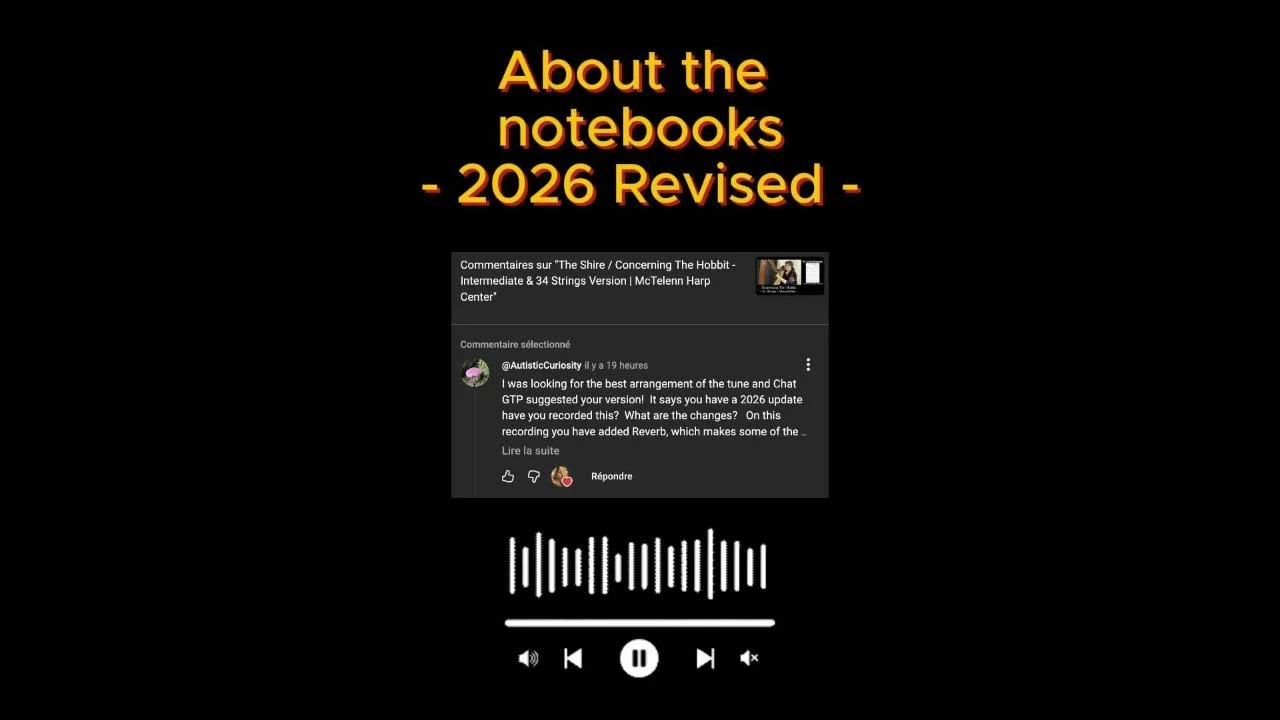
Since the beginning of 2026, you may have noticed a new term appearing on some of my sheet music booklets: “Revised.”
But what does this actually mean?
Is it simply a new edition of a piece? A correction? A few changes to some notes?
In fact, it goes a little further than that.
Sheet music, but also a learning path
When I started revisiting some of my older arrangements, I realised that although an arrangement could be enjoyable to play, it could sometimes be quite difficult for someone who was just beginning to learn the harp.
At the same time, there are so many pieces that we want to play when we start learning: music from films, television series, video games… pieces that we love and that make us want to pick up our harp and play.
So I began creating my “Revised” editions with this idea in mind.
The goal is not simply to make a piece easier.
It is to offer a progressive learning path around the same piece.
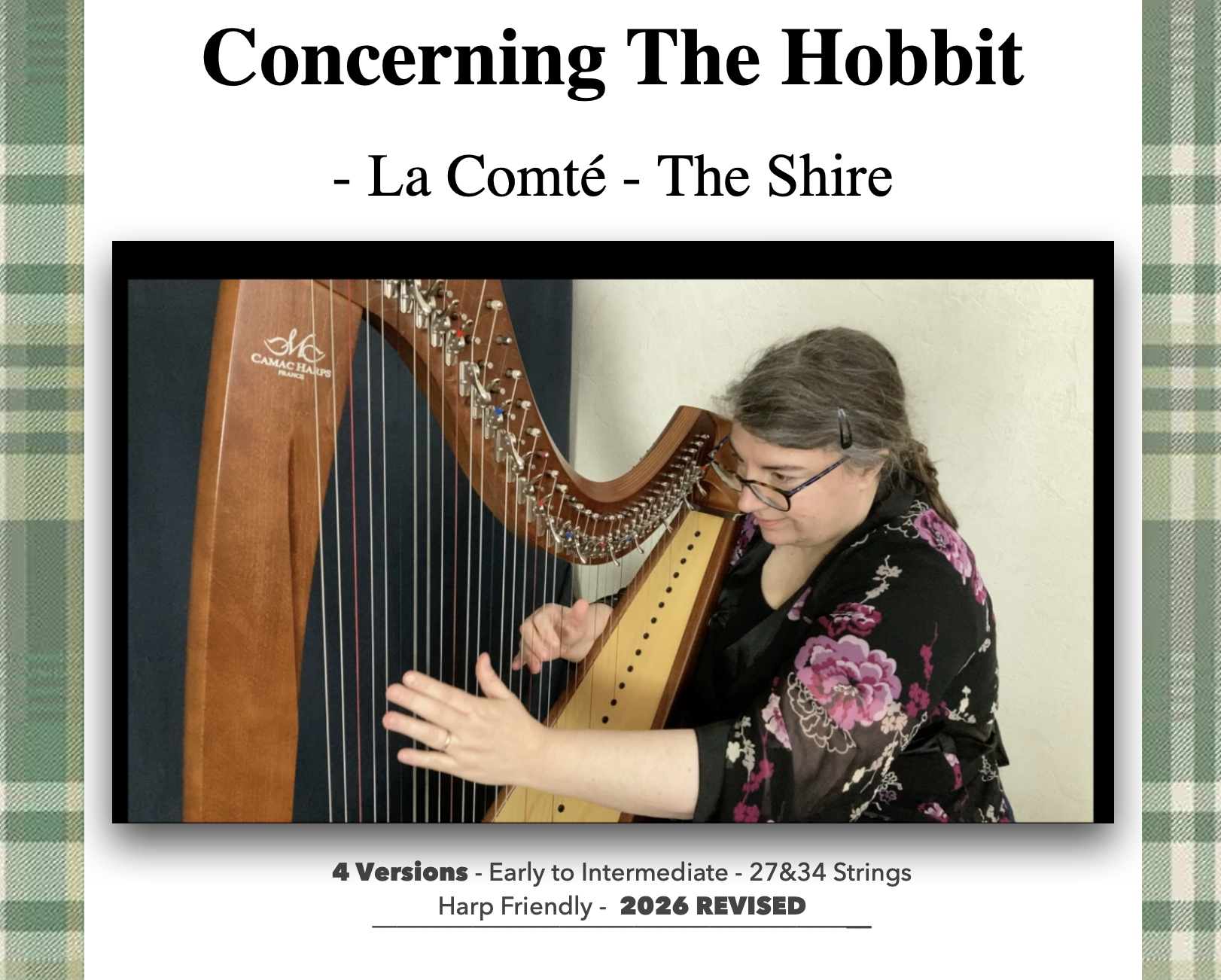
27-string or 34-string harp
The Revised booklets also take into account the two Celtic harp models that are most commonly used by my students:
27 strings and 34 strings.
This makes it possible to adapt the piece to the possibilities of each instrument, without asking a beginner to immediately have a larger harp.
But adapting the arrangement to the number of strings is only one part of the work.
Several levels for the same piece
In a Revised edition, I may offer several ways of approaching the same passage.
One version might be intended for a beginner, with a simpler left hand and a more accessible arrangement.
Then, step by step, other possibilities allow the piece to become richer: a more developed left hand, more notes, a more elaborate accompaniment…
The idea is to be able to start with a version you can actually play, and then come back to the same piece later and develop it further.
In this way, the sheet music does not become “too easy” too quickly.
It can grow with the harpist’s progress.
The example of Concerning the Hobbits
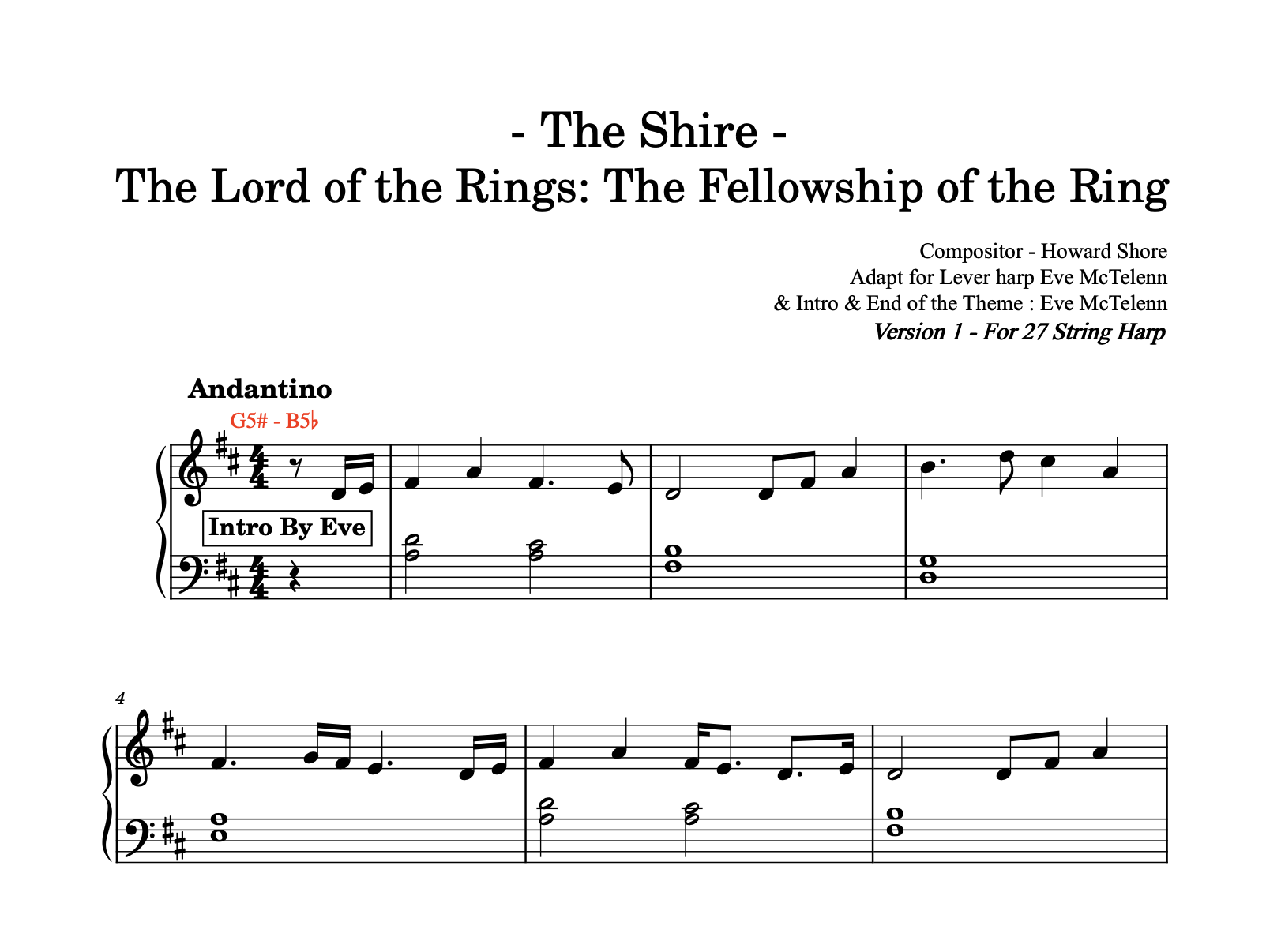
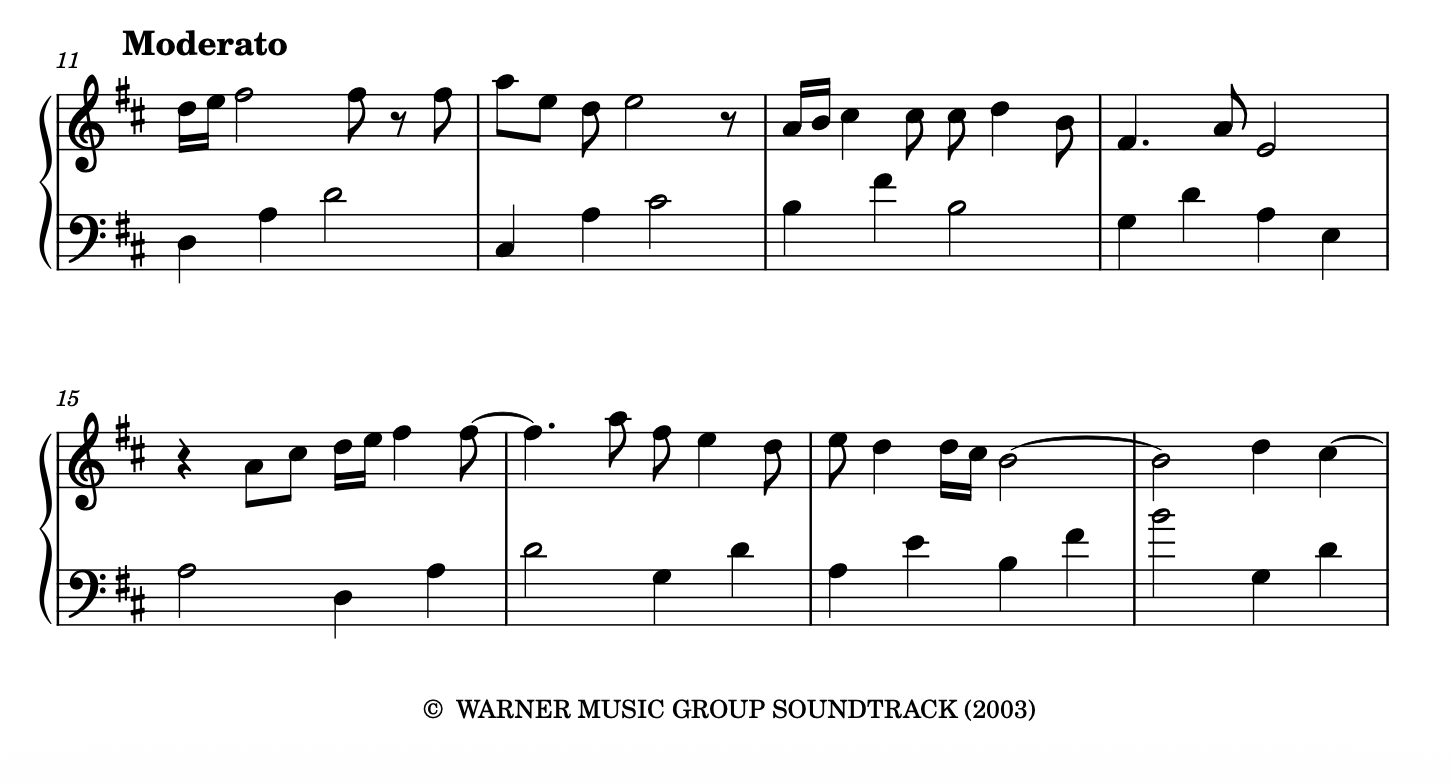
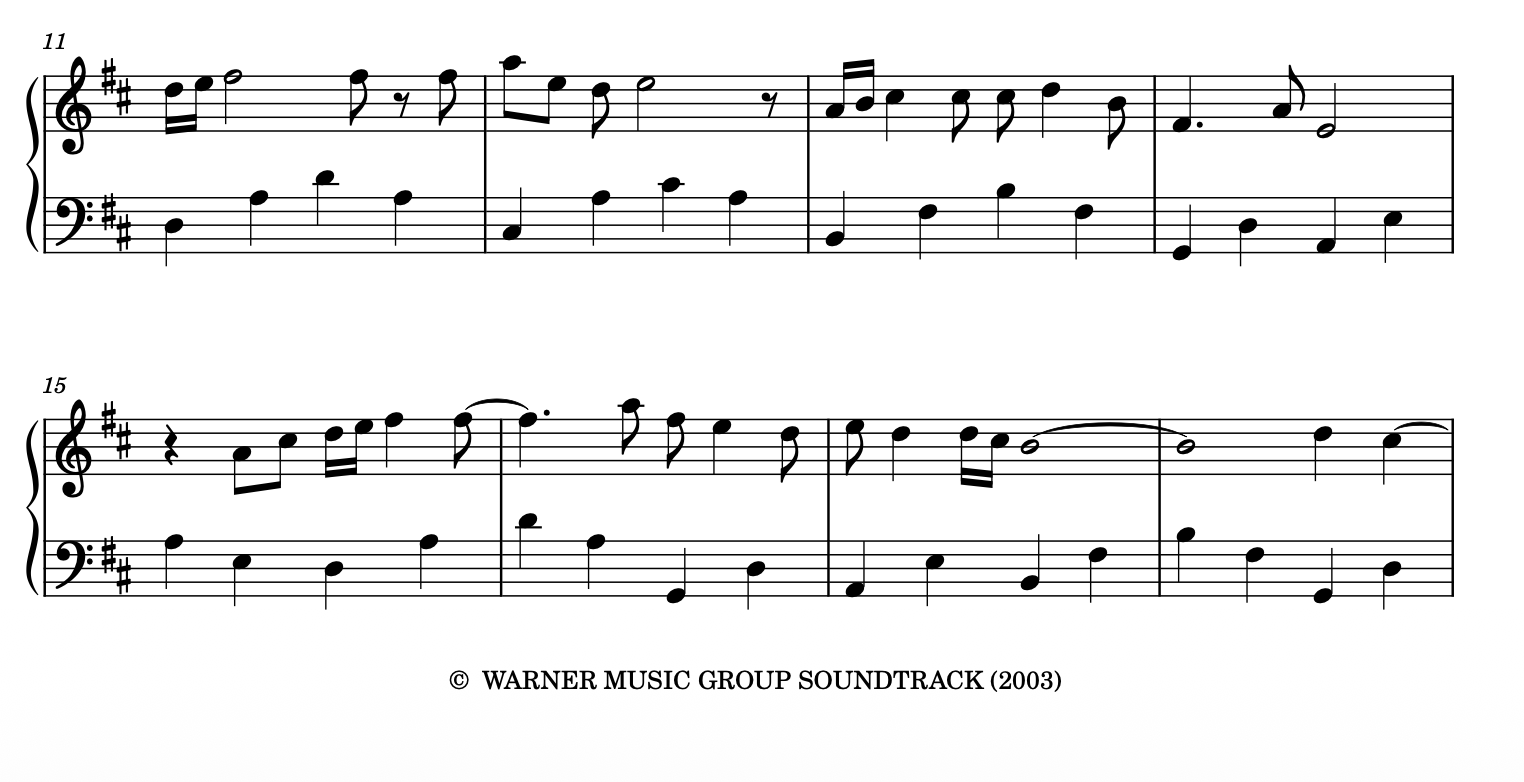
This is particularly clear in my booklet for Concerning the Hobbits, the beautiful music composed by Howard Shore for The Lord of the Rings.
For this new version, I have, among other things, rewritten the introduction so that it is closer to the way I actually play the piece.
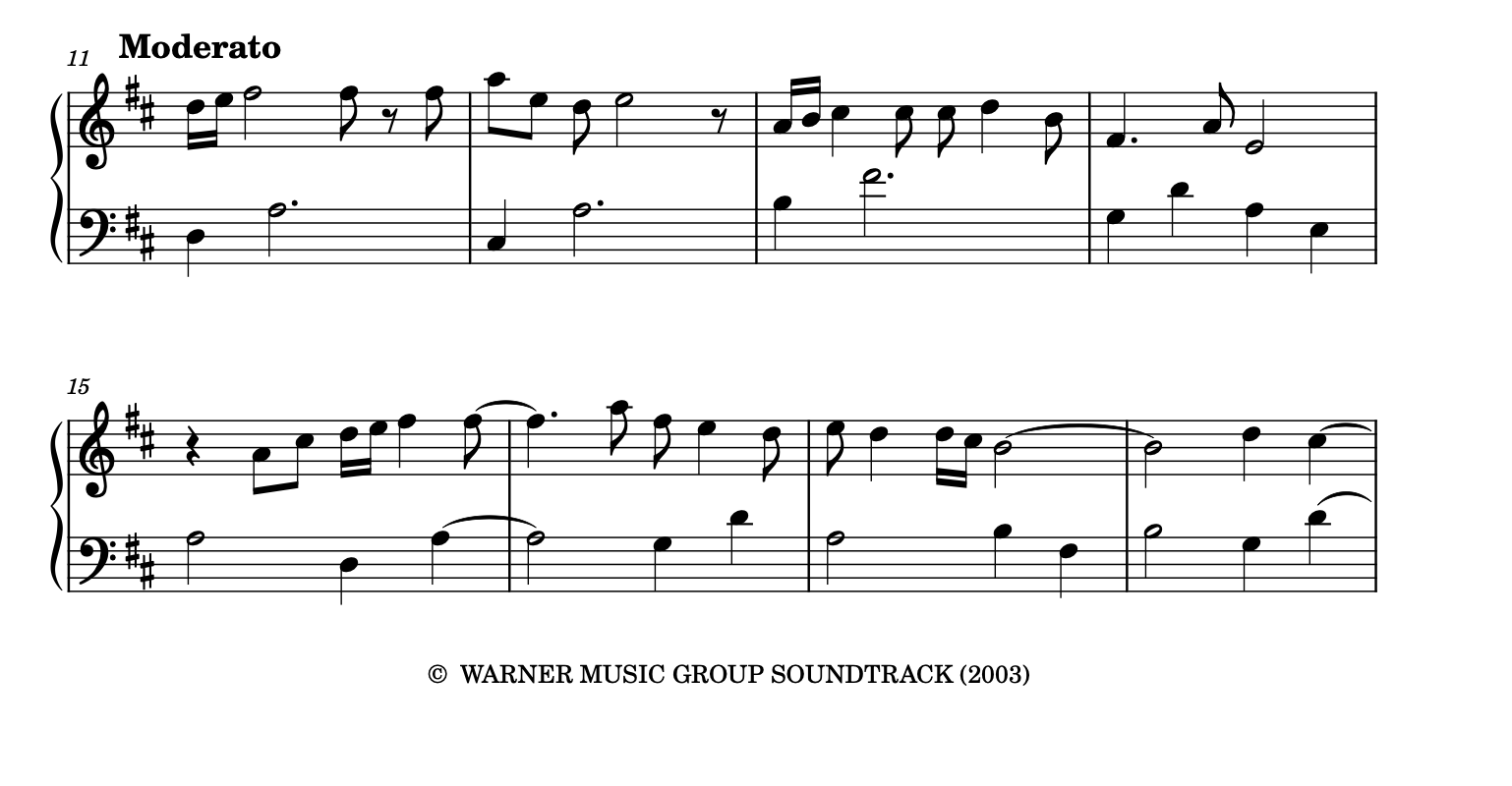
I have also included several possibilities, particularly for the left hand, so that the player can gradually develop their technique and progress through the piece.
You can see the differences between two versions directly on the piece’s page, where I have included screenshots showing extracts from the two arrangements.
The same approach can be found in several booklets
Concerning the Hobbits is not an isolated example.
I used the same approach when revising my Interstellar booklet, and more recently with Sleepsong.
Each piece is different, of course, so the adaptations are not exactly the same.
But the principle remains the same:
to allow a harpist to start somewhere, and then give them the possibility of going further.
This is particularly important to me because I meet many people who start learning the harp with the desire to play pieces they already love.
And I think that is perfectly legitimate!
Why should you have to wait several years before you can play music that inspires you?
An easier version does not mean a “lesser” version
This is an important distinction for me.
Adapting an arrangement for a beginner does not necessarily mean removing everything that makes the piece musically interesting.
It means thinking about what is essential, what can be kept, and what can be introduced gradually.
That is also why I prefer to talk about progressive versions rather than simply “easy versions.”
The goal is not only to make the piece easier to play.
The goal is to learn it.
And what about the videos?
Another question I was recently asked concerned my videos: some audio effects, particularly reverb, can make the version you hear seem different from the sheet music.
So it is worth clarifying that the videos I share are first and foremost my own interpretations.
They show my personal way of playing a particular version of the piece, with my own musical choices and, of course, the sound of the recording.
Reverb and other effects used during recording can change the colour and atmosphere of the sound, but they do not change the structure of the piece or the arrangement written in the sheet music.
A video therefore shows one way of interpreting a version; it does not necessarily represent all the possibilities included in the booklet.
Making people want to play
Ultimately, I think this is what lies behind the Revised booklets.
I want someone who is beginning the harp to be able to open a piece of sheet music and think:
“I may not be able to play everything yet… but I can start.”
Then, a few weeks or months later:
“Now I can try this other version.”
And eventually:
“Perhaps I can take it a little further.”
Because learning the harp is not only about collecting pieces.
It is also about seeing how far you have come.
And if an iconic piece of music can make someone want to begin that journey, then perhaps it deserves to be accessible a little earlier than expected.
English Podcast on youtube
Eve McTelenn - August 2026