Bernard Andrès: When Classical Harp Becomes Modern
Newsletter - August 2026
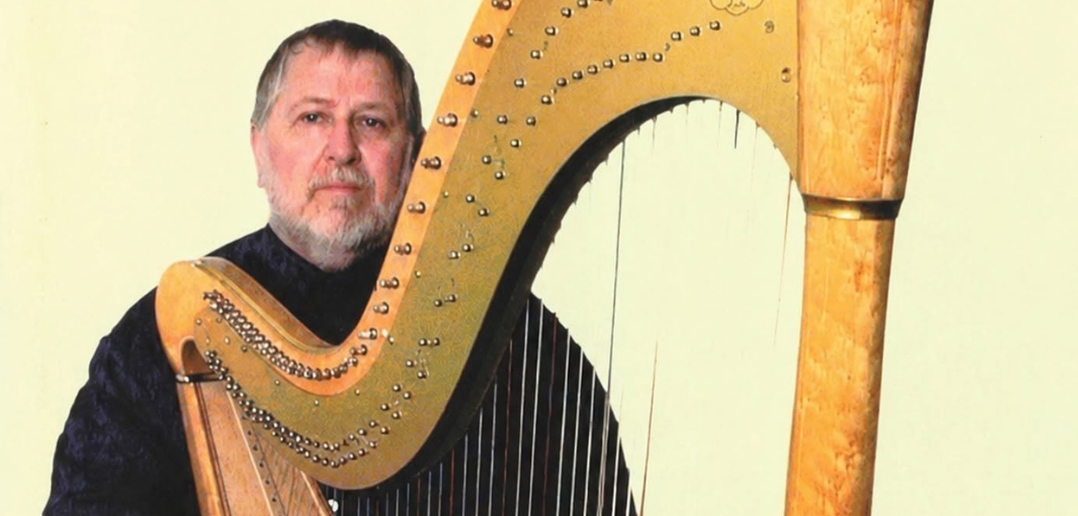
Bernard Andrès - 1941-2026
There are composers who write for the harp, and then there are those who seem to have truly understood what the harp can become in the hands of a musician. Bernard Andrès undoubtedly belongs to the second category.
Born in Belfort in 1941, Bernard Andrès studied at the conservatories of Besançon and Strasbourg before continuing his harp studies at the Conservatoire National Supérieur de Musique de Paris, where he won First Prize in harp. After a period with the French Air Force Band, he became principal harpist of the Orchestre Philharmonique de Radio France in 1969. Alongside his career as a performer and teacher, he developed a substantial body of music for both pedal harp and Celtic harp.
Bernard Andrès passed away on July 14, 2026, leaving behind a repertoire that has deeply influenced several generations of harpists.
A Different Way of Learning the Harp
What I find particularly interesting about Bernard Andrès is the place his music has taken in harp education and conservatory training.
His pieces have become an important part of the educational repertoire. Aquatintes, Charades, Préludes, Contes vagues and many others are regularly encountered by harp students. Aquatintes, for example, has appeared in examination syllabuses, and Aquatintes No. 2 was selected as a compulsory piece for Cycle 1 harp examinations in France in 2026.
But learning a piece by Bernard Andrès does not necessarily feel like “practising scales” or working through a traditional classical study.
That, to me, is one of the great strengths of his educational approach.
Through his compositions, students work on precision, movement, hand coordination, grace notes, chords, arpeggios, harmonics, glissandos and many of the harp's special sounds. His writing also explores unusual effects and the different colours that can be produced by the instrument.
And yet, all of this is incorporated into real musical pieces, with their own personality, atmosphere and often a beautiful melodic quality.
This is what allows a student to feel that they are playing contemporary music, rather than simply practising a technique.
Contemporary Music… but Accessible
Bernard Andrès has a very personal musical language: modern in its sounds and techniques, but rarely far removed from melody.
This is probably one reason his works remain so accessible to students. They introduce gestures, colours and sounds that go beyond the traditional language of the harp, while retaining something lyrical and expressive.
For a teacher, this is a wonderful quality: you can teach a technique without the student feeling that they are practising a technique.
And for harpists coming from the Celtic harp tradition, his repertoire is particularly interesting because he wrote a number of works specifically for Celtic harp, as well as pieces suitable for both Celtic and pedal harp. Aquatintes is a wonderful example: its six short pieces were written for harp or Celtic harp.
And then there is Aquatintes…
Personally, I have a particular fondness for Aquatintes.
I love these short pieces, which seem to bring colours and movements to the surface of the water. They are concise, yet they offer a surprising amount of musical material and allow the player to explore many different facets of the instrument.
And Aquatintes is really only a doorway into Bernard Andrès's musical world.
Beyond this collection lies a whole universe of pieces, studies, dances and collections in which we find the same desire to make the harp sound different. Les Petits Pas, Épices, Automates, Asters, Amarantes, Danses d'automne, Ganagobie and Les Îlets are just some of the many paths into his musical language.
Some are more pedagogical, others more poetic; some are more contemporary, while others have an almost dance-like quality. But they often share the same ability to make the student work on technique while still making them want to play music.
Perhaps this is Bernard Andrès's most beautiful legacy: helping to move the harp beyond the image of an instrument associated only with the great classical repertoire, and showing that it can be modern, expressive and surprising… while remaining deeply melodic.
And for us harpists, he leaves us above all many beautiful vibrations to keep resonating for a very long time.
Eve McTelenn - August 2026